About Quarried
American stone, easier to find.
Quarried is a free reference for architects, designers, contractors, and preservation professionals looking for American natural stone.
It connects stone to place — where it comes from, what it looks like, who produces it, and what the quarry can actually supply. Where available, that includes block sizes, fabrication capabilities, finishes, typical applications, and whether a quarry can help with a custom or unusual requirement.
The goal is broader coverage than any single industry directory, including small and mid-sized quarry operations that can be difficult to find online.
No producer pays to be listed, and inclusion is not tied to membership in any organization.
Why I built it
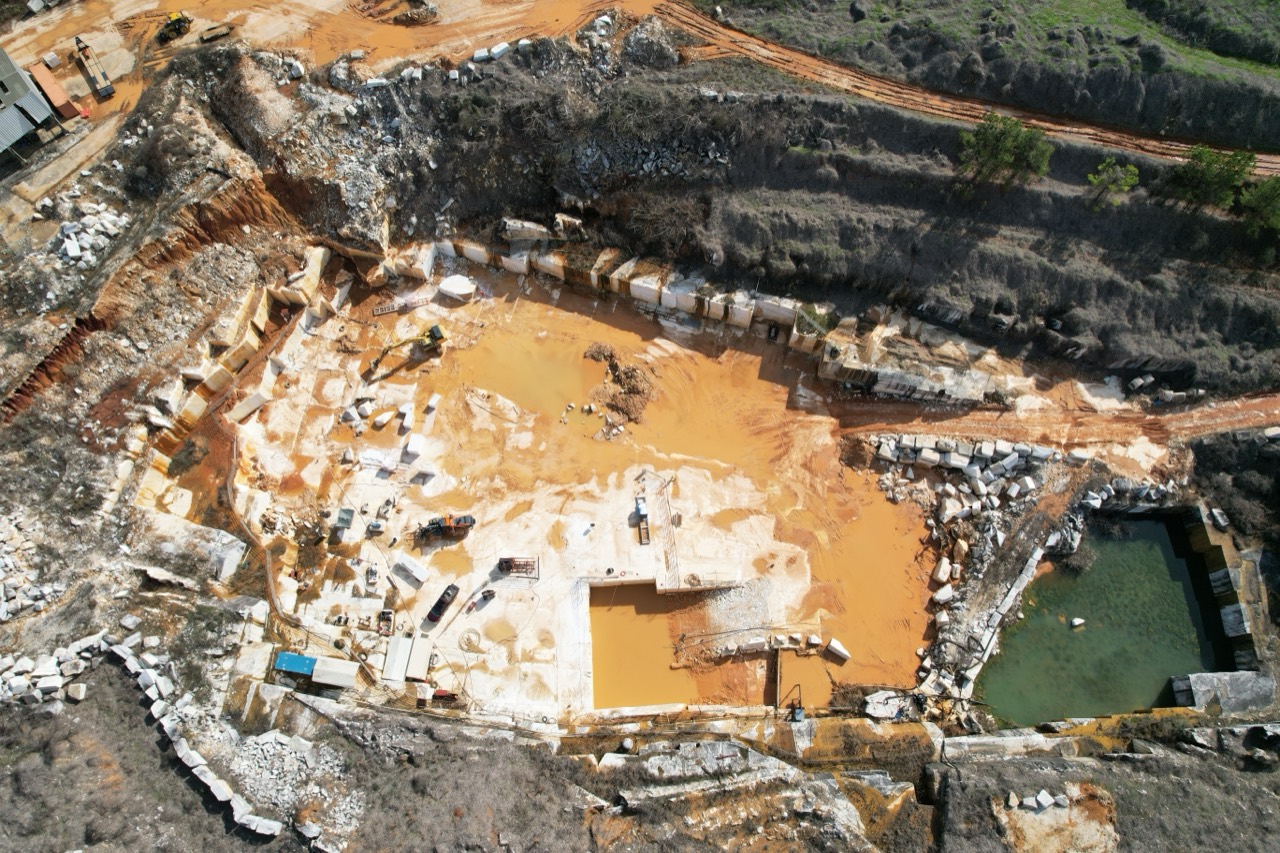
I'm Bintao Qin. Since 2019, I've worked with American stone from quarry to finished project — developing the marble quarry in Sylacauga, Alabama, overseeing fabrication of slabs and cut-to-size stone, and supplying material for civic, university, commercial, and other architectural projects.
When a project required material we didn't quarry, I sourced it from other American quarries and overseas producers and worked through fabrication, samples and approvals, logistics, and delivery.
That experience put me on several sides of the same process: quarry, fabricator, supplier, and buyer. Sourcing was where I kept running into the same problem.
American stone is remarkably diverse, but discovering it is harder than it should be. Information is scattered among industry directories, producer websites, old quarry records, technical documents, and, often, the people who have worked with a particular stone for decades.
And finding the name of a stone is only part of the job. A specifier needs to know what a quarry can actually do: whether the material is still available, what sizes can be extracted, what grades or ranges exist, how it can be processed, and who to talk to when the project doesn't fit neatly into a standard product.
Restoration and matching
This becomes especially important in restoration and renovation.
A building may have been constructed with American stone quarried 50, 80, or 120 years ago. The original company may be gone. The quarry may have changed ownership or names. A commercial stone name may have changed, or the same material may now be sold under a different name.
The original quarry may still be operating, or another part of the same geological deposit may still be available.
Finding that connection can make the difference between guessing at a substitute and specifying the original stone, or its closest match.
In my experience, much of this knowledge has never been formally documented. It lives with quarry owners, stonecutters, fabricators, salespeople, geologists, and others who have spent their careers around the material. As that generation gets older, some of that knowledge is disappearing with them.
Quarried is also an effort to preserve it — not just what the stone is, but where it came from, what the quarry can produce, what it has been used for, and who still knows it.
Disclosure
I have an ownership interest in the Sylacauga marble quarry in Alabama. Materials from the quarry are included on Quarried under Sylacauga Marble Quarry and are researched and presented using the same listing standards as other producers.
Specifying or matching American stone?
If you're evaluating a material, trying to understand what a quarry can supply, looking for a producer, or trying to match stone on an existing building, I'm happy to help.
My experience includes quarrying, stone selection and sourcing, fabrication, samples and approvals, restoration matching, and architectural stone supply. If a request develops into paid consulting work, the scope and fee are agreed in advance.
Discuss a project